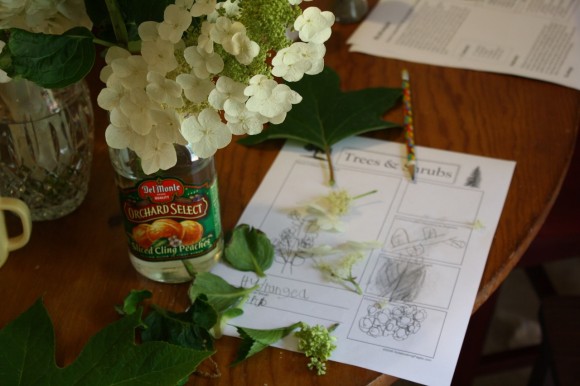
 With the excitement of the new direction of the Outdoor Hour Challenges in our minds, we turned to our hydrangeas. Not only because they are a favorite, not only because they are abundant in several colors in our yard…
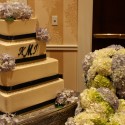
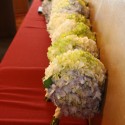
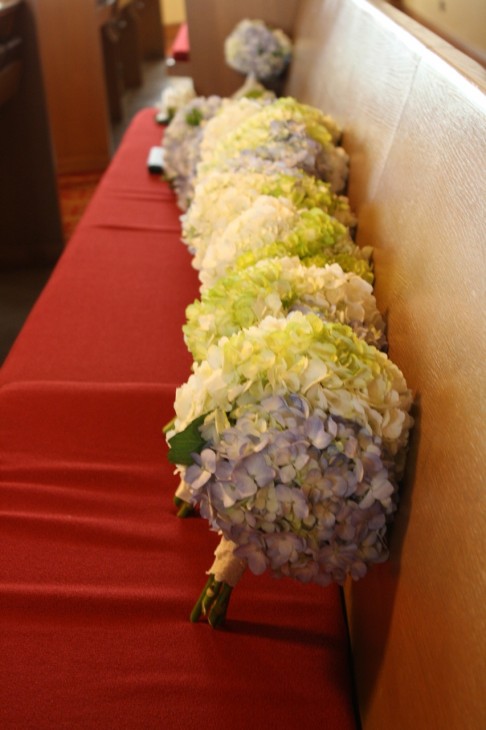 …but also because we are fresh from a wedding featuring hydrangeas in all the bouquets and arrangements.
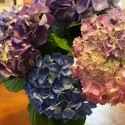
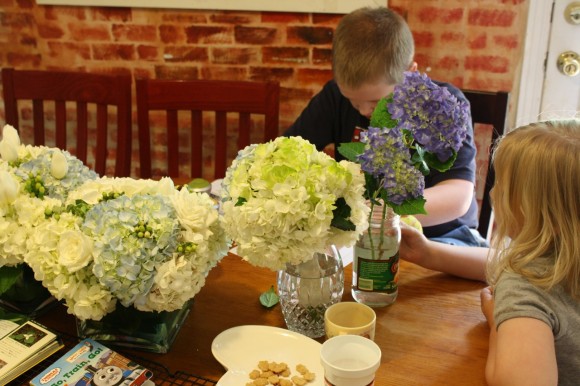 We looked at the gorgeous arrangements from the wedding – right in the middle of our kitchen table – and found that these prompted questions:
- Is it a bush, shrub or a flower? Though we couldn’t find specifics in our Handbook of Nature Study, all online searches proved it is a flowering bush or shrub.
- Does it have bark? It does not but does have a tough stalk. It is a perennial.
- Is it a composite flower? We decided yes because of all we learned about dandelions and sunflowers. The National Arboretum site has so much good information about the huge variety of hydrangeas, also about seeds and layers.
- Are we supposed to prune hydrangeas? Our hydrangeas that frame our front door get rather brown and unsightly in the winter. We’ve wondered if we were supposed to prune them. But, apparently our sheer neglect has been good for our bigleaf hydrangeas. Read more about hydrangea care here.
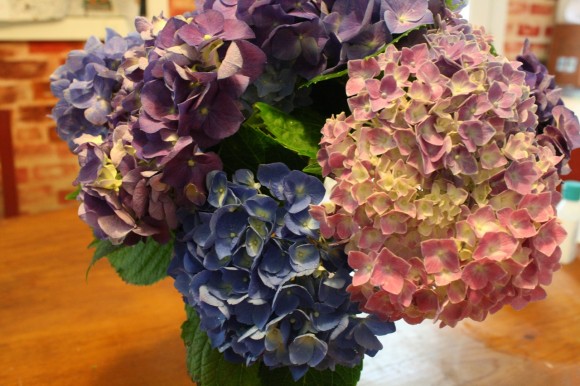
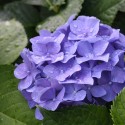
- What causes the different colors of hydrangea blossoms? the acidity of the soil causes the change in the colors. The bushes at our front door range from light blue to pink while the ones in the side yard are a deep, deep purple. The ones at Nana’s house are a pink – almost red. According to the sites we read – when the soil is high in aluminum, the flowers are blue. Neutral soils produce white blossoms. While alkaline soils make for pink flowers.
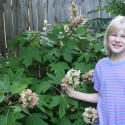
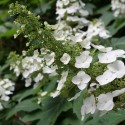
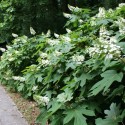
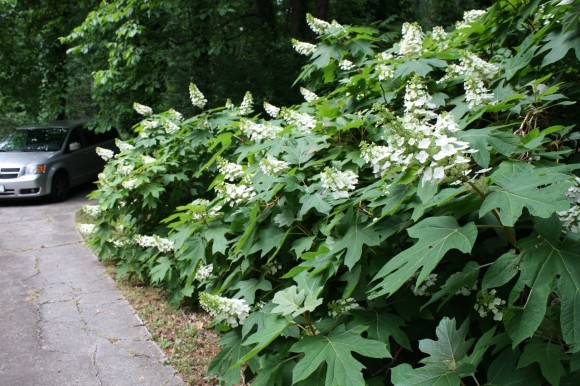 See our van in the left of photo? That proves how big Mama Ann’s oakleaf hydrangea is! This variety thrives in dabbled woodland light.
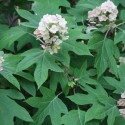
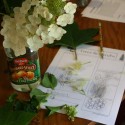
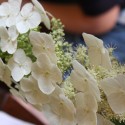
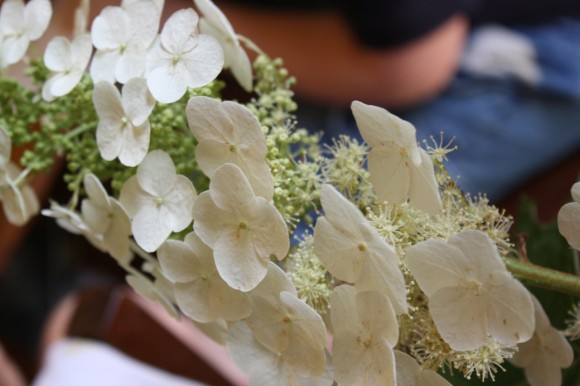 We collected and we sketched. We talked about the beloved oakleaf hydrangea in our backyard. The one that was started from the enormous bush in Mama Ann’s side yard. Aren’t the white flowers beautiful?
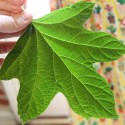
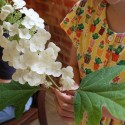
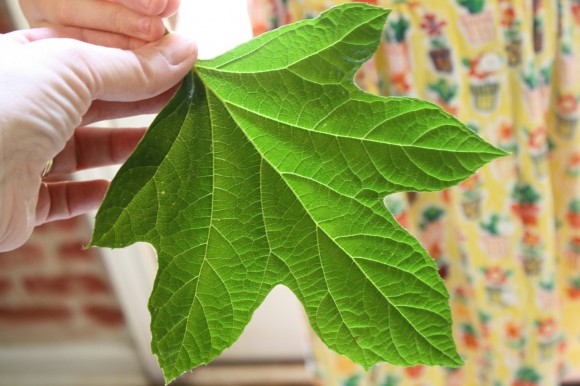 And see the leaf? It does look just like the leaf of an oak.
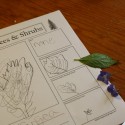
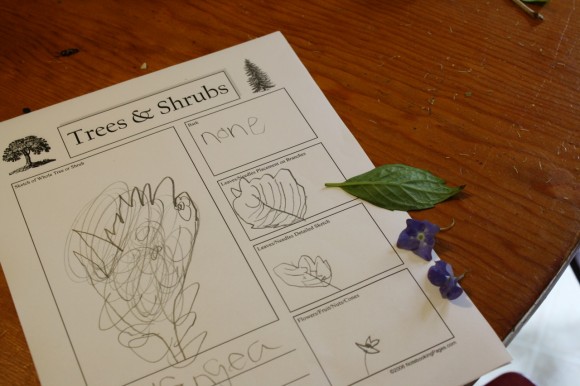 Eldest boy did a leaf rubbing (photo at very top). His favorite color of hydrangea is white. Above is Middle Girl’s notebook page.
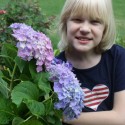
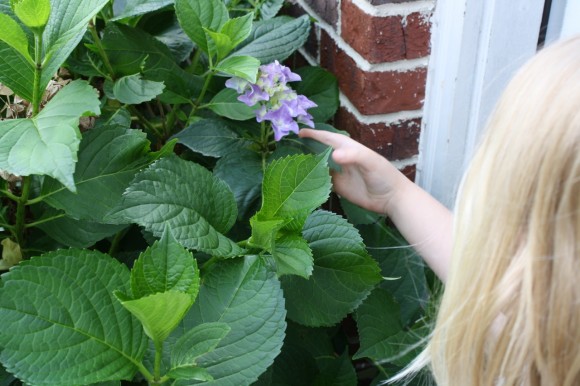 Youngest girl collected the blue blossom from the bigleaf hydrangea bush at the front door. Her favorite color is light blue.
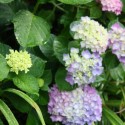
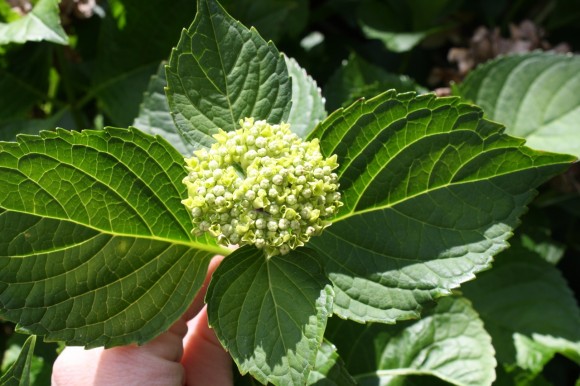 Middle girl pointed out the flowers just starting to bloom. Her favorites are pink and purple.
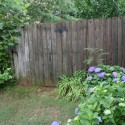
Because we love them so, we are sharing a hydrangea gallery. Most from our yard except the wedding photos and the dark pink in Nana’s yard:
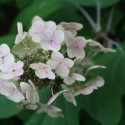
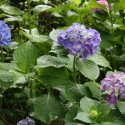
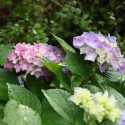
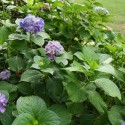
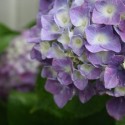
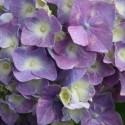

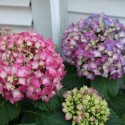
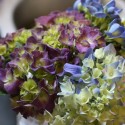
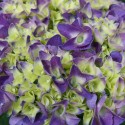
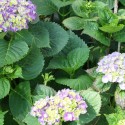
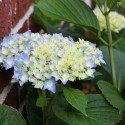
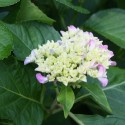
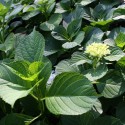
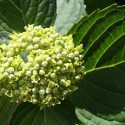
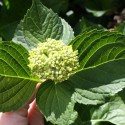
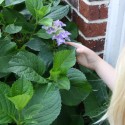

We all decided that hydrangeas are heavenly.
 They will adorn our kitchen table throughout the summer. Can you tell we love them?

This is one of the best nature study posts I have ever seen. Oh, my, I want to run out and buy one right away! I had never really ever looked at them and seen how very, very beautiful they are.
Phyllis – hydrangeas are one of those beautiful things we’ve always loved but never really taken the time to study further. This was such joy! Our bushes at the front door are huge this year we have to push them back to get inside 🙂 They thrive in that north facing side of the house. Though the deep purple in the side yard fair well too.
Our hydrangeas are hardly even getting their leaves yet. 🙂
What a beautiful entry and I enjoyed reading your research about this flower. The oak leaf variety if very pretty and so big!
Thanks so much for sharing your nature study of this wonderful garden flower.
Hydrangeas are my absolute favorite, and I am so envious of your bounty! The row of oakleaf hydrangeas made me catch my breath — I LONG for a row just like that. And it’s a good thing you neglected your bigleaf varieties, since they bloom on last year’s growth. A fun experiment might be to add an alkaline or aluminum-based agents to the soil to see if you can affect the flower colors. I’ve heard of folks doing this to make a lovely lavender color. Thanks for the gorgeous photos and information!
How fun! The fact that the soil determines the color is the reason why I love them.
Beautiful flowers! I’ve always loved these but don’t dare plant them in our yard – the deer eat everything! Thanks for sharing!
Hydrangeas truly are so beautiful! Very nice post!!